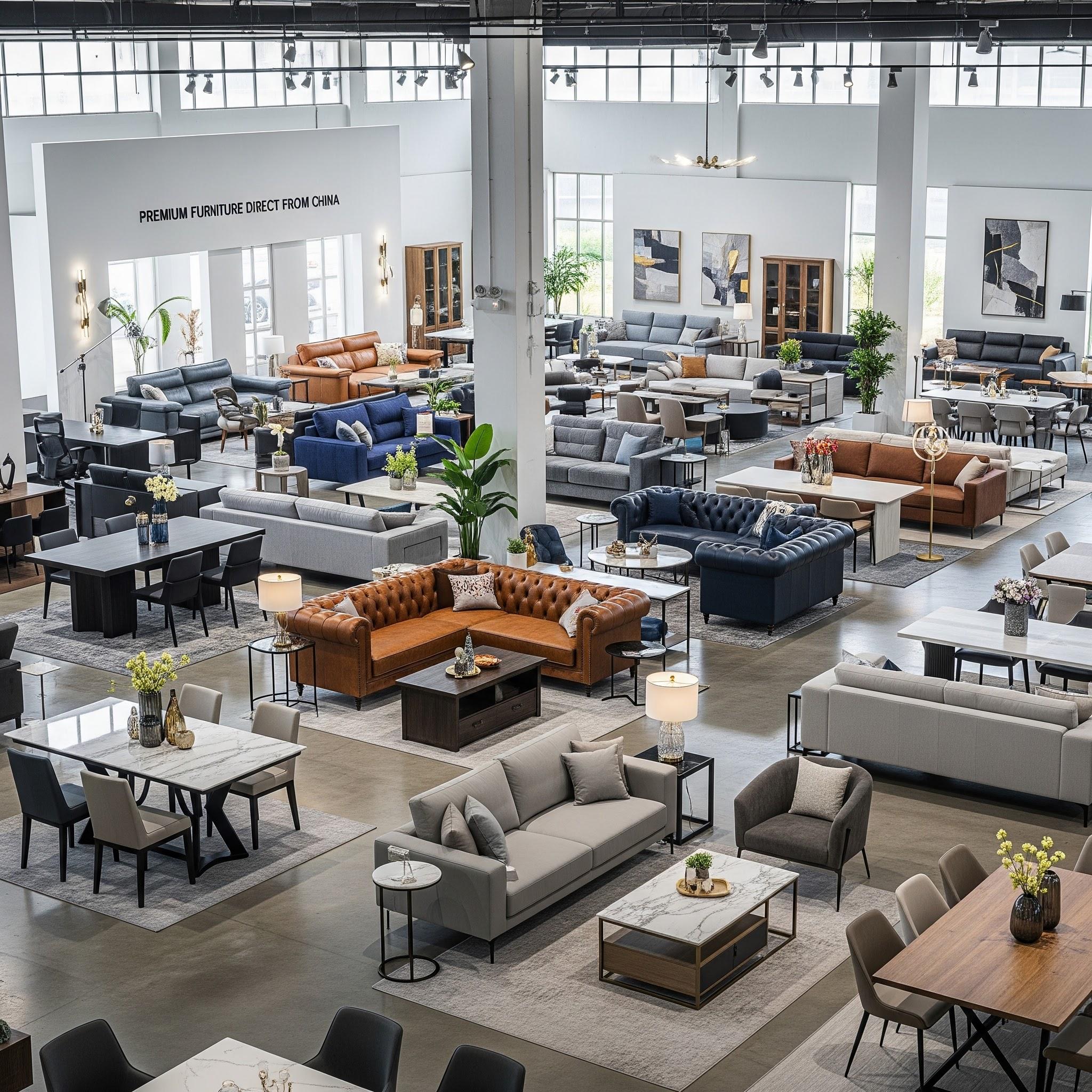
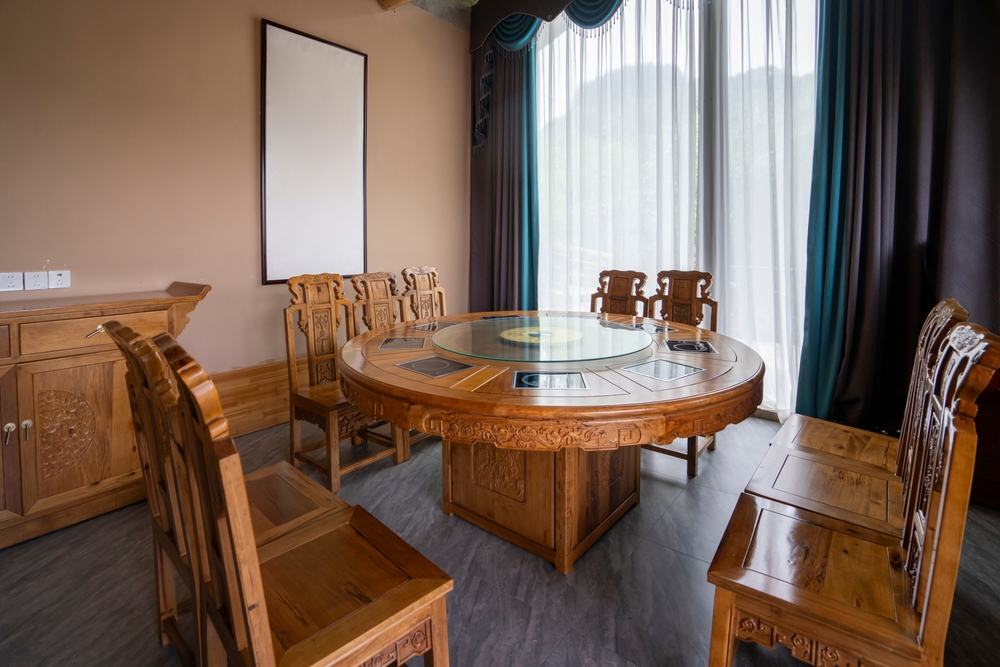
Is high import duty or unreliable sourcing holding you back from importing China furniture? You’re not alone—and that’s exactly why we’re here. At OyeExpress, we’ve seen too many smart Indian businesses lose margin to missteps: inflated freight bills, wrong supplier choices, or simply unclear processes. And when it comes to China furniture, even a small mistake can snowball into big costs.
That’s why we’ve made it our mission to simplify the journey. In 2025, importing doesn’t have to feel like a gamble. Our clients are getting it right—with smarter sourcing, accurate customs handling, and support that keeps profits intact.
This guide pulls back the curtain. We’ll show you 7 proven strategies that we use every day to help businesses import furniture from China without overpaying. Whether you’re just starting out or scaling up, these tips will save you time, stress, and most importantly—money.
Ready to import smarter, not harder? Let’s begin.
Why Overpaying Is a Common Trap for First-Time Importers
The excitement of bringing in China furniture often masks hidden costs. Let’s dive into the areas where costs spiral—and how you can sidestep them
Duty Misclassification & Hidden Charges
One wrong HS code and duties can double—or even triple. These aren’t theoretical losses; they’re real money slipping through your fingers. Plus, costs like port handling, demurrage, and insurance often come as “unexpected” add-ons when you’re least prepared.
Supplier Overquoting & Inflated CIF Values
Some sellers quote high CIF (Cost, Insurance, Freight) to inflate margins. This makes your import duty—a percentage of CIF—jump unnecessarily. You end up paying more duty and funding higher freight—without even knowing it.
Common Overcharges & How to Avoid Them
Cost Trap | What’s Included | How to Avoid It |
HS Code Mismatch | Incorrect duty rate due to wrong product classification | Always verify HS codes using ICEGATE before placing any order |
Inflated CIF Value | Higher freight + duty due to misleading invoice amounts | Use separate freight & insurance or get a detailed proforma invoice |
Port & Handling Fees | Charges for loading, unloading, storage at port | Request itemized fees and compare between FOB and CIF |
Demurrage & Storage Fines | Penalties for delays in clearance | Set firm timelines—OyeExpress alerts you early to prevent delay charges |
Middleman & Agent Fees | Added costs hidden in the quote | Work with verified suppliers or OyeExpress—no hidden markups |
GST & Import Duty Misreporting | Extra costs from tax errors | Cross-check duty/GST with real-time ICEGATE data before paying |
By understanding these traps, you’re already a step ahead. With OyeExpress guiding you, every shipment of China furniture becomes transparent, predictable, and profitable. Let’s move on to the first proven way to protect your margins.
Here’s another resource you’ll find useful: How China Furniture Became the Backbone of the Imported Furniture Market – Explained in 7 Stats
Tip 1 – Use the Right HS Code from the Start
One of the biggest reasons importers overpay on China furniture is misclassification of goods. Even a minor HS code error can hike your duty from 20% to 40%—just like that.
How Wrong Classification Affects Duty Rates
Every product you import must be assigned a Harmonized System (HS) code. This code determines the applicable basic customs duty, IGST, and additional cesses. For example:
- Classifying a sofa as “upholstered office furniture” may attract 25% duty.
- But the same sofa, labeled as “general home furniture,” might only attract 18%.
Customs doesn’t care if it was an honest mistake. If they believe you’ve under-declared the correct classification, you could face penalties, delays, or even cargo seizure.
Check HS Codes Using ICEGATE (with Example)
India’s official ICEGATE portal (https://www.icegate.gov.in) is where you can verify exact duty rates. Here’s how:
- Visit the ICEGATE Tariff Calculator.
- Enter the HS Code (e.g., 9403 for furniture).
- Select country of origin – China.
- You’ll see a complete duty breakdown: BCD, IGST, SWC, etc.
Example: For HS Code 9403 (Other Furniture and Parts):
- Basic Customs Duty: 20%
- IGST: 18%
- Social Welfare Surcharge: 10% on BCD
Pro Tip: Always request your supplier’s suggested HS code but double-check it locally before filing your Bill of Entry.
Using the right HS code is the simplest way to keep your import costs in check—and we at OyeExpress help ensure you never get it wrong.

Tip 2 – Buy Directly from Verified Manufacturers
If you’re importing China furniture in 2025, skipping middlemen is a smart financial move. Buying through resellers may seem convenient at first, but it comes with markup costs that silently eat into your profit margin.
Avoid Resellers and Middlemen Fees
Here’s the truth: many listings on global B2B platforms are actually trading companies—not manufacturers. They buy from actual factories and resell to you at inflated prices. You end up paying 10–25% more than you need to, and in most cases, lose visibility into the product’s real origin and quality standards.
Some red flags of resellers:
- Vague company profiles without factory photos
- No production certifications (like ISO, BSCI)
- Evasive responses to material or customization queries
Use Canton Fair, Alibaba Verified, or OyeExpress Sourcing
To ensure you’re dealing with genuine manufacturers:
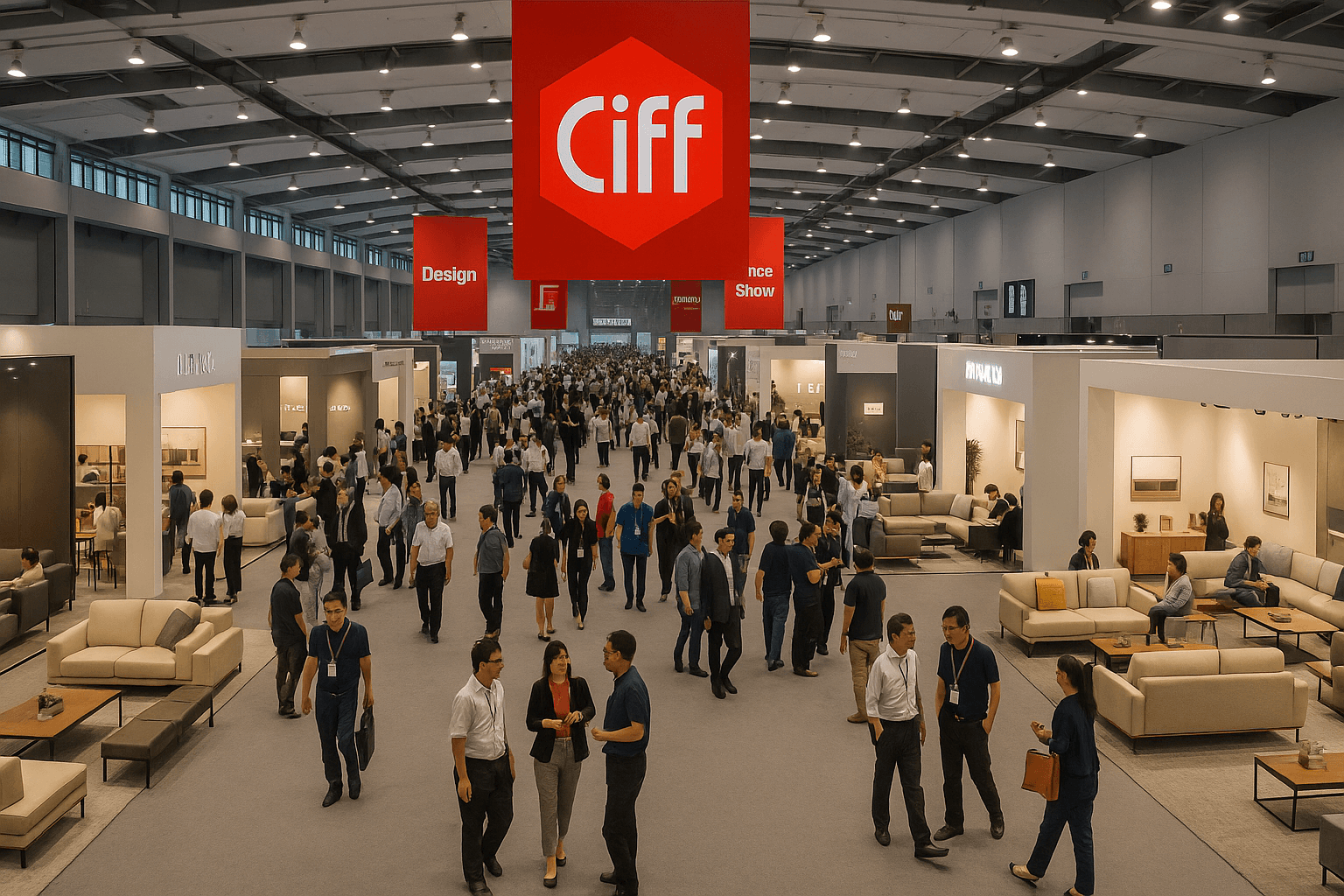
- Visit the Canton Fair (online or in-person) – China’s largest supplier expo.
- Use Alibaba Verified Suppliers – look for gold badges and factory audit reports.
- Let OyeExpress do the legwork – we personally verify suppliers, factory credentials, and ensure you’re working with direct manufacturers.
We don’t just connect you to a list—we connect you to the right factory. And that’s how you bring China furniture to India without unnecessary costs or quality risks.
Tip 3 – Choose Door-to-Door Shipping to Avoid Hidden Costs
Shipping furniture may sound simple—until surprise fees start adding up. If you’ve ever been confused between terms like FOB, CIF, or DDP, you’re not alone. Choosing the wrong shipping method can quietly inflate your total landed cost.
What’s Included in DDP vs FOB vs CIF
Here’s a quick breakdown of what each shipping term really covers:
Shipping Term | Covers at Origin | Freight | Destination Charges | Customs & Taxes |
FOB | ✅ | ❌ | ❌ | ❌ |
CIF | ✅ | ✅ | ❌ | ❌ |
DDP (Door-to-Door) | ✅ | ✅ | ✅ | ✅ |
With FOB or CIF, you’ll still have to handle customs clearance, taxes, local logistics, and last-mile delivery on your own—or pay an agent. That’s where unexpected bills often creep in.
Why Door-to-Door with OyeExpress Saves on Logistics Chaos
When you choose door-to-door shipping with OyeExpress, we bundle every stage into one transparent quote:
- Freight booking and container loading
- Customs clearance, duty calculations, BOE
- GST, handling, and delivery to your warehouse
No paperwork overload. No third-party agents. No surprise penalties.
For China furniture shipments, this full-service model can save you up to 20% in avoidable costs—not to mention time and stress. If you want hassle-free importing, door-to-door is the smart move. Let us handle the heavy lifting while you focus on growing your business.
Tip 4 – Negotiate MOQ and Consolidated Shipping
Worried that ordering China furniture means committing to huge volumes? That’s an outdated myth.
Today, many suppliers are flexible—especially if you know how to ask.
Low MOQ Options for India-Based Resellers
If you’re just starting out or testing new designs, you don’t need to buy 500 chairs or 100 sofas. Plenty of verified suppliers in China accept MOQs (Minimum Order Quantities) as low as:
- 10–30 pieces for basic furniture lines
- 1 set for premium samples or outdoor sets
- Mix-and-match orders within the same container
At OyeExpress, we help negotiate MOQs that make sense for your business size, not the factory’s preference.
Shared Container Shipping: Big Savings, Small Batches
Not ready for a full container load (FCL)? No problem.
LCL (Less-than-Container Load) or consolidated shipping lets you share container space with other importers. This slashes freight charges dramatically—without compromising on timelines.
With OyeExpress managing your China furniture consolidation, you’ll get:
- Optimized container space
- Lower per-unit shipping cost
- Coordinated delivery at your Indian address
It’s smart. It’s scalable. And it’s how modern importers cut overhead without cutting quality.
Tip 5 – Claim Duty Exemptions via EPCG or SEZ Schemes
If you’re importing China furniture for resale or project use, don’t leave government duty exemptions on the table. These legal benefits exist to make global sourcing easier—and smarter—for Indian businesses like yours.
Who Qualifies and How to Apply
Two major schemes can help reduce or eliminate your import duties:
- EPCG (Export Promotion Capital Goods) Scheme
This allows duty-free import of capital goods or inputs (like furniture) used in export-oriented businesses. If you’re furnishing spaces for overseas clients, hotels, or even export-focused projects, you could qualify.
Check eligibility and apply via DGFT - SEZ (Special Economic Zone) Imports
If you operate within or supply to SEZ units, furniture can be imported without paying customs duty—provided it’s consumed within the SEZ ecosystem.
Bonus: If you’re not in an SEZ, bonded warehouse facilities allow you to defer duty payment until you remove the goods for Indian sale. Combine this with an EPCG license, and you’ve got a serious cost advantage.
At OyeExpress, we help you navigate these benefits without the paperwork headache. From documentation to coordination with DGFT and CBIC norms, we ensure you never pay more than required.

Tip 6 – Use Accurate Declared CIF Value
One of the most overlooked reasons importers overpay is incorrect CIF (Cost, Insurance, Freight) declaration. When you import China furniture, every rupee declared under CIF affects your duty calculation. So, precision here isn’t optional—it’s a cost-saving necessity.
Keep Freight and Insurance Split for Accurate Duty
Many suppliers bundle product cost, freight, and insurance under a single figure. This sounds convenient, but it can backfire. If freight or insurance is inflated or poorly itemized, it drives up your dutiable value, which directly impacts how much you pay in import duty.
Instead:
- Ask for a detailed breakdown of the CIF components.
- Ensure invoices clearly separate product value, freight, and insurance.
- Use this clarity to avoid disputes at customs—and overpaying on duty.
How OyeExpress Supports CIF Optimization Legally
At OyeExpress, we don’t just manage paperwork—we optimize it. Our team ensures your CIF declaration follows ICEGATE standards and includes verified cost components. We also review invoices and shipping documents to make sure no unnecessary padding affects your bottom line.
With us, your China furniture shipments arrive not just safely—but smarter.
Tip 7 – Work with End-to-End Import Experts Like OyeExpress
Importing China furniture sounds exciting—until you hit supplier vetting, customs forms, and warehouse delays. This is where most businesses lose time and money. But when you have the right partner, you avoid the chaos before it begins.
Vendor Verification, Customs, Warehousing, Tracking—All in One Place
At OyeExpress, we don’t just offer a piece of the puzzle—we handle the full picture:
- Verified Manufacturer Sourcing: Skip risky suppliers and connect with factory-direct vendors only.
- Documentation & Customs Filing: From HS codes to BOE, we help you stay compliant and audit-ready.
- Flexible Warehousing: Use bonded or last-mile storage depending on your business model.
- Live Shipment Tracking: Know where your China furniture is at all times, without chasing agents.
Conclusion
Importing China furniture to India doesn’t have to mean draining your budget on hidden fees, wrong classifications, or unreliable suppliers. When you follow the right steps—from selecting accurate HS codes to negotiating better shipping terms—you unlock real savings and peace of mind.
And with OyeExpress, you’re never on this journey alone.
We don’t just connect you to suppliers—we back you up with verified sourcing, transparent payments, smart logistics, and hassle-free customs clearance. It’s all designed to make importing furniture from China simpler, faster, and truly profitable.
Let’s build your import strategy for 2025—without the stress.
Ready to get started? Partner with OyeExpress and move smarter, not costlier.
Have questions? Drop them below—our experts are here to support you.
Found this helpful? Share it with your sourcing team or fellow business owners.
Here’s to clean paperwork, smooth logistics, and stylish China furniture that makes your margins smile!
FAQ’s
1. What is the average import duty on China furniture in India?
Import duties can range between 28% to 38% depending on the HS code classification, including customs duty, IGST, and other surcharges. It’s crucial to classify the product correctly to avoid overpaying.
2. How can I check the correct HS code for furniture items?
You can use the ICEGATE HS code search tool provided by Indian Customs. It helps identify the correct classification and corresponding duty rate for your product category.
3. Is it safe to buy China furniture directly online?
Yes, if you purchase from verified manufacturers on platforms like Alibaba (with Verified tags) or use sourcing partners like OyeExpress. Avoid unverified suppliers and always request samples before placing bulk orders.
4. How does consolidated shipping help me save on costs?
Consolidated shipping combines smaller orders from multiple buyers into one container. This reduces freight charges and is ideal for first-time or small-volume importers.
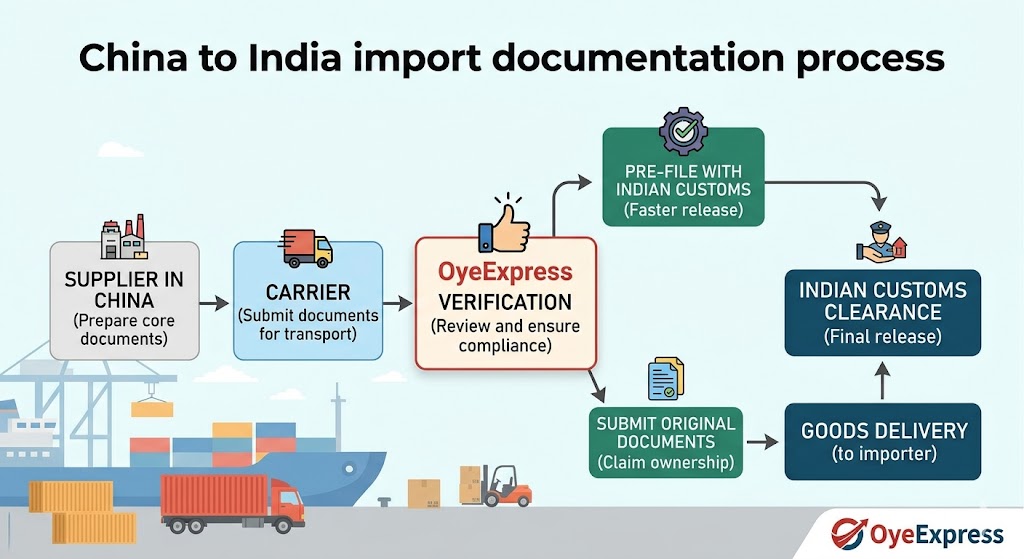
5. What documents are required to import furniture from China?
You’ll typically need a commercial invoice, packing list, IEC code, Bill of Entry (BOE), shipping bill, and insurance documents. OyeExpress handles documentation and compliance to ensure a smooth process.