Importing from China? Great—but are you truly prepared to avoid the 5 mistakes that silently drain profits from Indian importers every year? Learning how to import products from China isn’t just about finding a supplier and hitting “buy.” It’s a layered process involving compliance, quality control, logistics, and clear documentation—any misstep can lead to delays, penalties, or worse, complete shipment loss.
Here’s the reality:
Thousands of small and mid-sized Indian businesses import goods from China every month. But more than 60% of them face unnecessary customs delays, misquoted freight, or surprise duty charges. Why? Because they skipped key verification steps, didn’t understand product classification, or trusted the wrong freight partner.
You don’t have to fall into the same trap.
If you’re here searching how to import products from China, you’re likely looking for a smarter, risk-free process. This guide delivers just that. We’ll walk you through the 5 costliest importing mistakes—from supplier fraud to customs errors—and show you exactly how to avoid them.
This isn’t theory. It’s practical, tested insight. Let’s get started.
Why Importing from China Is Still Worth It—If Done Right
Let’s get this straight: importing from China isn’t a shortcut. It’s a strategy. And if you play it right, the advantages can significantly outperform domestic sourcing—especially if you know how to import products from China the right way.
The Edge: Pricing Power & Product Variety
China remains the global hub for manufactured goods—and for good reason.
- Competitive pricing thanks to economies of scale
- Access to thousands of SKUs, from factory-grade office furniture to custom electronics
- Flexibility in product specs, branding, and packaging—even at relatively low volumes
For small businesses, this can be game-changing. You can offer more variety to customers while protecting your profit margins. In many cases, imported goods from China cost 30–50% less than similar items sourced locally.
But here’s where it gets tricky…
The Trade-off: Risk If You’re Not Careful
Cheap doesn’t always mean smart.
Importing becomes a problem when you skip the fine print or rush into deals.
Here’s what’s at stake if you’re not strategic:
- Quality mismatches between samples and bulk orders
- Incorrect HS code usage leading to 30%–40% excess duty
- Missed BOE filings, customs penalties, and clearance delays
- Complete payment loss due to fake suppliers
“Most losses occur before the container even leaves the port,” says Ajay Kumar, a senior import logistics consultant. “The biggest mistake? People don’t fully understand how to import products from China—they just assume it’s like placing an Amazon order.”
Your Move
The message is clear: China offers massive upside, but only to businesses that approach it with informed caution.
Start with solid sourcing practices, understand duty classifications, and work with partners who know the landscape.
And if you’re still wondering whether it’s worth the effort—the short answer is yes.
Just make sure you’re doing it right.
Here’s another resource you’ll find useful: 8 Profitable Products to Import from China That Are in High Demand in India
Mistake #1 – Skipping Supplier Verification
When it comes to how to import products from China, verifying your supplier is not optional—it’s critical. Yet, it’s one of the most common and expensive mistakes new importers make.
What Can Go Wrong with Unverified Sellers
If you’re dealing with an unknown or unverified supplier, here’s what can go sideways:
- Fake product promises – What you see in catalog images might never arrive, or worse, arrive damaged or totally different.
- Vanishing acts – Some fraudulent suppliers disappear after receiving partial or full payment.
- Inconsistent communication – Delays, poor documentation, and no accountability after dispatch.
In short: when you skip supplier verification, you’re not just risking money—you’re risking your business reputation.
Trusted Platforms for Verified Suppliers
If you want to avoid this trap and learn how to import products from China with peace of mind, start with trusted sourcing platforms:
- Alibaba Gold Suppliers – These suppliers undergo authentication and factory inspections.
- Made-in-China Verified – Offers third-party audit reports, certifications, and video tours.
- Canton Fair – China’s largest trade fair. Great for face-to-face validation and sampling.
Still overwhelmed? This is exactly where import service providers like OyeExpress come in.
We do the legwork—background checks, business licenses, certifications, and in-person audits—so you can focus on growth, not risk.
Mistake #2 – Using the Wrong HS Code or Undeclared Value
If you’re learning how to import products from China, one thing you must get right from the beginning is documentation—especially your HS code and CIF declaration.
Impact on Import Duties, GST, and Legal Issues
HS (Harmonized System) codes are the international classification for products. They determine your import duty, GST, and whether your product is eligible for any exemptions.
Using the wrong HS code can:
- Increase your duty liability unnecessarily
- Trigger red flags at customs, delaying your shipment
- Attract fines or even seizure under misdeclaration penalties
And here’s the tricky part—some furniture or electronic items fall under multiple sub-categories. You need to get specific.
Pro Tip: Always cross-check HS codes using India’s official portal—ICEGATE HS Code Finder.

How to Declare Accurate CIF Value
CIF (Cost, Insurance, Freight) is the declared value customs uses to calculate your duties.
What many importers do wrong:
- Bundle freight and insurance as inflated values, which raises duties
- Forget to separate packaging or last-mile charges, making the total taxable unnecessarily high
Instead:
- Ask your supplier to break down invoice costs clearly
- Keep shipping bills and insurance slips as proof of actual value
Import service providers like OyeExpress help you structure invoices and shipping paperwork to avoid overpaying—without cutting corners.
Final Word
Incorrect classification or over-declaration isn’t just a beginner’s error—it’s an expensive one. If you want to master how to import products from China, nail your documentation early. It’s your best defense against unnecessary costs.
Mistake #3 – Not Asking for Samples Before Ordering
When learning how to import products from China, skipping the sample stage might seem like a way to save time and money. But in reality, it can cost you far more in returns, complaints, or worse—dead inventory.
Real Examples of Poor Product Quality Issues
Here’s what we’ve seen happen to new importers:
- A retailer orders a batch of wooden side tables, only to receive cracked units with uneven polish.
- An electronics seller receives Bluetooth speakers—half of which don’t work because the internal battery specs were misrepresented.
- An apparel brand imports bulk t-shirts that shrink after a single wash, even though the supplier claimed “pre-shrunk cotton.”
These aren’t rare stories. They’re the norm when skipping product sampling.
Sample Process: Shipping, Lead Time, Inspection
Here’s how to do it right:
- Step 1: Finalize product specs with your supplier and request a physical sample.
- Step 2: Pay a small sample fee (often refundable on full order).
- Step 3: Use a courier like FedEx or DHL to get the item within 5–10 days.
- Step 4: Inspect the sample thoroughly—material, finish, durability, and packaging quality.
- Step 5: Approve only after you’re confident it meets your end-user standards.

If you’re unsure what to look for or don’t want to manage it alone, OyeExpress can inspect your sample directly in China before you commit to production. That means fewer surprises, fewer headaches.
Bottom Line
Skipping samples might feel like a shortcut. But when learning how to import products from China, samples are your insurance policy. Test before you invest.
Mistake #4 – Choosing the Wrong Shipping Term (FOB, CIF, DDP)
One of the most misunderstood parts of how to import products from China is choosing the right shipping term. It sounds technical—but it directly impacts how much you pay, how much control you have, and how smoothly your goods arrive.
How Costs and Responsibilities Shift with Each Term
Let’s break down the three most common terms:
FOB vs CIF vs DDP – Comparison Table
Term | Who Pays Freight? | Who Handles Customs? | Best For |
FOB (Free On Board) | You (after port) | You | Experienced importers with logistics support |
CIF (Cost, Insurance, Freight) | Seller | You | Moderate experience, but risk of hidden inland charges |
DDP (Delivered Duty Paid) | Seller | Seller | First-time importers or low-risk tolerance |
With FOB or CIF, importers often find themselves buried under unexpected paperwork or demurrage fees. This can turn a “great deal” into a costly misstep.
Why Door-to-Door Services Like OyeExpress Reduce Stress
At OyeExpress, we recommend DDP shipping for most small or first-time Indian importers. Why?
- We handle freight, port clearance, customs, and final delivery.
- You get a single quotation—no hidden fees or surprise delays.
- We optimize the CIF declaration legally to keep duties in check.
Door-to-door means no scrambling to find a customs agent or worrying about your shipment getting stuck in port. We’ve seen it all, and we’ve fixed it all.
Bottom Line
The right shipping term isn’t just about saving money—it’s about saving your sanity. As you learn how to import products from China, choosing DDP or a trusted logistics partner can mean the difference between smooth sailing and import chaos.
Related read: 2025 Forecast: Imported Furniture Demand in India to Rise by 18% – Are You Ready?
Mistake #5 – Ignoring Indian Customs Regulations
If there’s one thing that can stall your entire import plan, it’s getting caught in customs red tape. Many importers—especially first-timers—get everything right in China but stumble the moment the goods hit Indian shores. Understanding Indian customs is a critical part of how to import products from China without headaches.
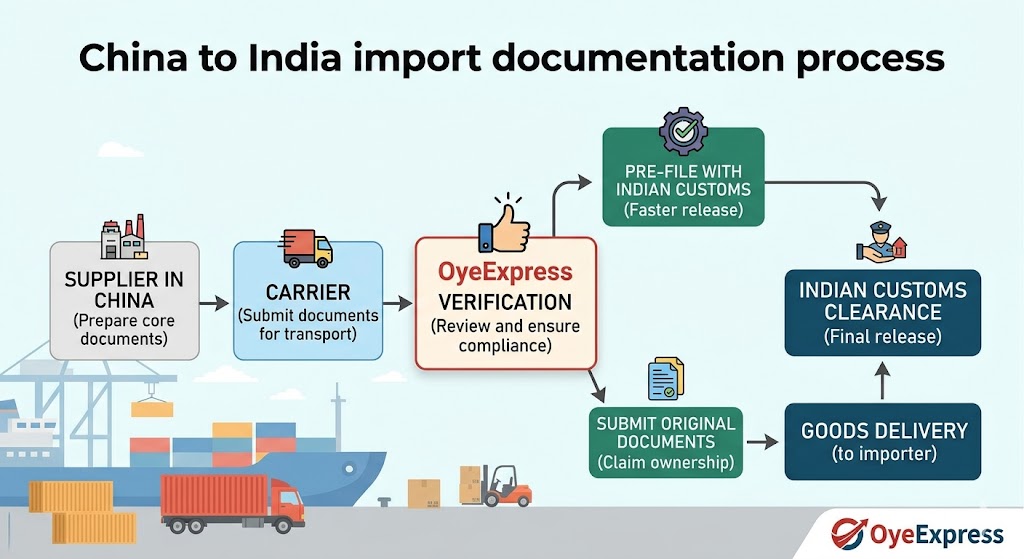
Importance of Paperwork: BOE, GST, Commercial Invoice, Insurance
Here’s a quick checklist of documents every importer must have in order:
- BOE (Bill of Entry): Filed through ICEGATE, this is your official declaration to Indian Customs.
- GST Certificate: You must be a registered GST business to claim input tax credit on imports.
- Commercial Invoice & Packing List: Clear and accurate product descriptions, quantities, and HS codes.
- Import Insurance: Proof of coverage protects you and speeds up customs processing.
Even a small mismatch—like the invoice currency or HS code—can trigger a query, delay, or penalty.
How Penalties and Delays Happen
When paperwork is incomplete or inconsistent:
- Your consignment could be flagged for manual inspection.
- You might have to pay demurrage (penalty for delayed clearance).
- Goods could be held or returned, leading to huge financial loss.
This isn’t theory—we’ve seen it happen to new importers who underestimated Indian customs rules.
How OyeExpress Keeps You Compliant
We handle all customs documentation, duty calculations, and ICEGATE submissions for you. That means zero risk of missing a BOE deadline or submitting an incorrect HS code.
🔗 Need help with customs? Explore OyeExpress customs support
Ignoring Indian import law is not a minor mistake—it can cost you lakhs. The smarter way to succeed in how to import products from China is to pair great sourcing with full regulatory compliance.
Conclusion
Importing from China remains one of the smartest moves for Indian retailers, e-commerce sellers, and entrepreneurs—but only if you sidestep the five costly mistakes we’ve discussed. Whether it’s misjudging suppliers, skipping samples, or underestimating customs documentation, each misstep can shrink your margins and delay your growth.
The good news? You don’t have to figure it all out on your own.
OyeExpress is here to make your importing experience smooth, compliant, and profitable—right from sourcing to doorstep delivery.
Ready to Import Like a Pro?
Let’s get started—partner with OyeExpress today.
Got questions? Drop them in the comments or reach out.
Found this guide helpful? Share it with your sourcing team.
FAQ’s
1. What is the first thing I should check before importing from China?
Start by verifying the supplier. Use platforms like Alibaba Gold, Made-in-China Verified, or work with import experts like OyeExpress to avoid scams or quality issues.
2. How do I avoid paying excess import duty in India?
Use the correct HS code and declare accurate CIF values. Refer to ICEGATE for duty rates and always keep invoices and documents ready for customs.
3. Are samples really necessary before placing bulk orders?
Absolutely. Sampling lets you inspect quality, finish, and packaging before committing to large quantities. It’s a low-cost insurance against bad shipments.
4. What’s the safest shipping term for new importers?
DDP (Delivered Duty Paid) is the most secure for beginners—it covers freight, customs, and delivery. OyeExpress offers reliable door-to-door DDP services.
5. What documents are required for customs clearance in India?
You’ll need a Bill of Entry (BOE), commercial invoice, packing list, GST registration, insurance, and importer’s IEC code. Working with a platform like OyeExpress ensures nothing is missed.